Free shipping in Sweden on purchases over 299 SEK


How to use room spray correctly at home

How to use room spray correctly at home
A room can be spotless, thoughtfully arranged and beautifully decorated – and still feel unfinished. Often, it is the scent that is missing. When you know how to use room spray correctly, it becomes more than a quick refresh – it becomes a way of giving your home character, rhythm and a sense of destination.
Room spray is one of the easiest ways to transform the atmosphere of a room in a matter of seconds. At the same time, it is also a product that many people use incorrectly. Too much fragrance can feel heavy. Too little barely registers. And if you spray in the wrong place, the effect disappears faster than you intended.
Here is what actually makes a difference – from amount and distance to the time of day you should spray in order to achieve a more elegant and long-lasting scent experience.
How to use room spray correctly from the start
The most common mistake is treating room spray as a last resort when the air feels stale. But a well-composed room spray works best when used with a little more precision. Think of it as the final detail in a room – much like perfume on the skin or a carefully chosen accessory to a simple outfit.
Always start by adjusting the amount to the size of the room. In a smaller bathroom or hallway, one to two sprays is often enough. In a living room or bedroom, you may need three to four, depending on how open the layout is and how intense the fragrance is. A premium spray often has a higher concentration and therefore requires less than simpler alternatives.
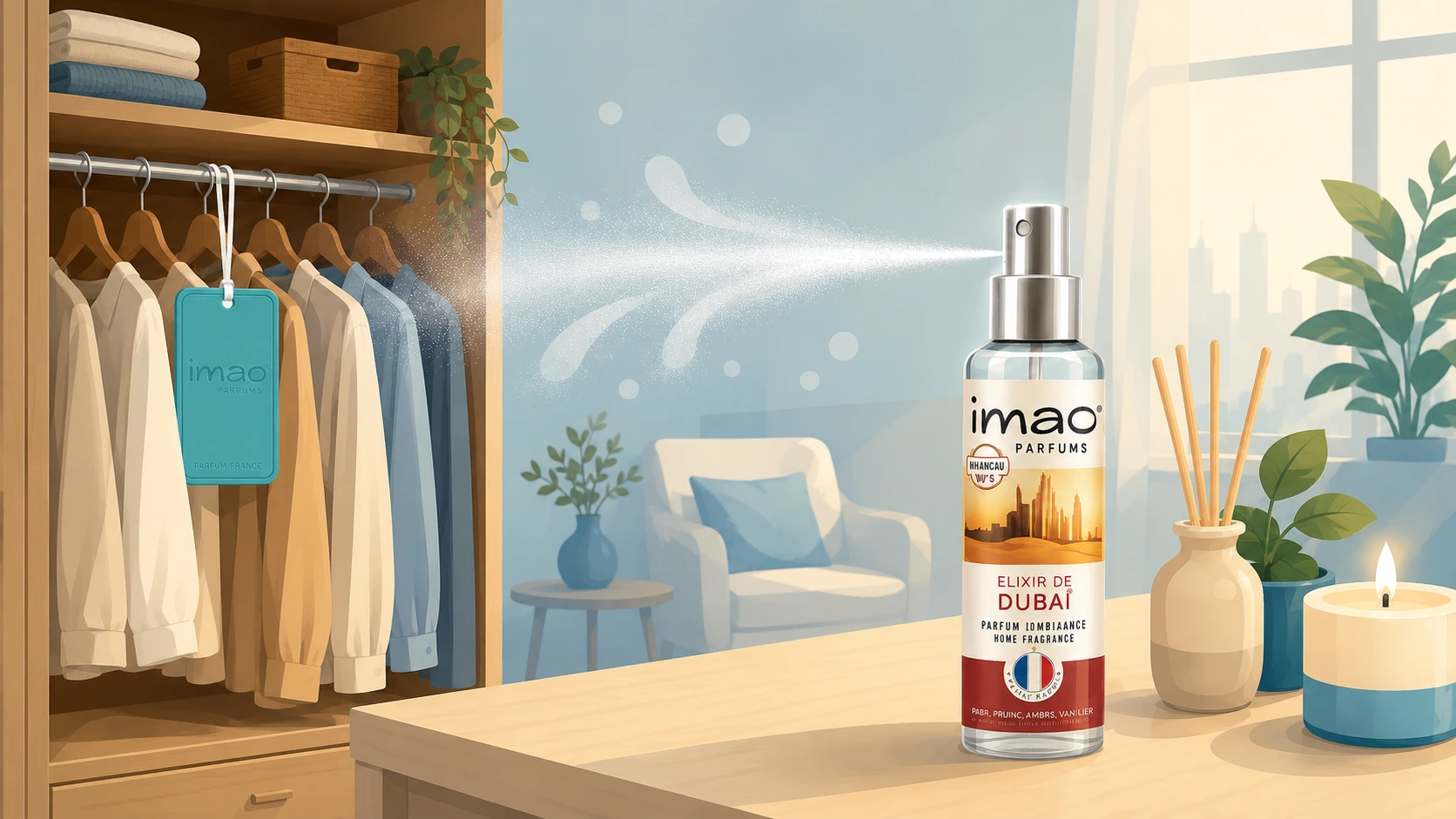
Distance matters too. If you spray too close to textiles or furniture, the scent becomes concentrated in one small area rather than spreading softly through the room. Hold the bottle upright and spray into the air, ideally towards the centre of the room or in an open passage where air moves naturally.
Where you spray affects the whole experience
It is easy to assume that scent spreads equally well regardless of where you use it. That is rarely the case. Airflow, materials and the function of the room all affect how the fragrance is perceived.
In a living room, it usually works best to spray away from the sofa, curtains or an open corner where the air can carry the scent further. In the bedroom, many people prefer a softer feeling, and in that case it is better to spray lightly in the room a little while before going to bed rather than directly over the bed. In the hallway, a discreet spray near the entrance can create a first impression that feels both welcoming and considered.
The kitchen is a little more sensitive. There, the room spray often has to compete with cooking smells, coffee or spices. If you want to freshen up after cooking, it is wise to ventilate briefly first and then spray sparingly. Otherwise the fragrance risks blending with lingering smells in the air and feeling less clean.
The bathroom is the room where most people use the most spray, but often less is needed than you might think. A couple of light sprays after airing usually gives a better result than trying to mask damp or stale air with too much fragrance.
When should you use room spray?
Timing has more of an impact than many people realise. If you spray just before guests arrive, you get a clear initial effect – but if you want to create a more natural feeling, it is better to do it 10 to 15 minutes in advance. That gives the scent time to settle into the room and feel more integrated than intrusive.
In the morning, a fresh and clean fragrance can give the home energy, especially in the hallway, bathroom or kitchen. In the evening, warmer and softer notes tend to suit living rooms and bedrooms better. Your choice of scent can therefore follow the rhythm of the day, much like how you choose a perfume or outfit to match the occasion.
There are also moments when you should wait. Directly after cleaning with strong products, it can be wise to let the air clear first. The same applies if the room is already warm and stuffy. Room spray works best in a fresh base environment – not as a way of masking a problem.
How to use room spray correctly without overdoing it
A truly elegant fragrance feels present without taking over. This is where many people go wrong. The first few seconds after spraying can be intense, which makes it easy to assume the effect will disappear immediately and so you spray more. But the scent often develops gradually over the following minutes.
If in doubt, always start with less than you think you need. Wait a few minutes and check again. This is especially true if you are using fragrances with woody, oriental or gourmand-inspired notes, as these tend to linger longer than fresh citrus or marine tones.
You should also consider how many other scent sources are already present in the room. Candles, diffusers, laundry detergent, flowers and cleaning products all affect the overall picture. If everything competes at once, the experience easily becomes muddled. A well-chosen room spray makes the greatest impression when it gets to play the leading role – or at least be a clear part of a harmonious scent composition.
Textiles, air and surfaces – what works best?
Many people wonder whether room spray should be sprayed into the air or onto textiles. The answer is that it depends on the product, but in most cases the air is the safest and most versatile choice. It gives a more even distribution and less risk of staining or concentrated scent spots.
Certain textiles, such as curtains and cushions, can hold scent for longer. But this requires care. Spraying too close can affect the material, especially if it is delicate or light-coloured. If you want a soft, lasting feeling in a room, it is better to spray lightly near textiles rather than directly onto them – unless the product is specifically designed for that purpose.
Air circulation is another detail that is often overlooked. A room with a little movement in the air helps the scent spread more evenly. A completely still room can cause the fragrance to settle in one corner or feel uneven. That is why room spray often works best after you have moved around in the room, opened a door or let the air refresh for a short while.
Choose a scent to match the room and the mood
Getting it right is not just about technique – it is also about choosing the right character for the right environment. A light, clean or citrus-driven scent often works well in bathrooms, hallways and kitchens where you want a fresh, clear feeling. In living rooms, more enveloping notes can create depth – soft woods, white flowers or warm tones with a sense of travel and elegance.
In the bedroom, many people prefer something calmer and more discreet. An overly energetic or sweet scent rarely works there if the goal is rest. At the same time, it is very personal. Some want the bedroom to feel like a boutique hotel, others want it to be almost unscented with just a faint signature in the background.
That is precisely where room spray becomes interesting. You can change the feeling of your home without changing the décor, and you can give different rooms different identities. One destination in the hallway, another in the living room – such as the romantic and soft Week-end à Paris Spray with notes of lavender, rose and vanilla – and another in the car or bedroom. For many people, it is exactly that kind of detail that makes everyday life feel more personal.
Common mistakes to avoid
The biggest mistake is using room spray to mask bad air rather than first creating a clean base. Another is over-applying within just a few seconds, before the scent has had time to settle. Many people also spray too low, directly at furniture or the floor, when the effect is better if the fragrance is allowed to spread higher up in the room.
A more subtle mistake is choosing a scent purely based on what smells strongest at first test. The best room spray is rarely the one that takes up the most space immediately, but the one that builds atmosphere in a way that feels natural and refined over time. That is where you notice the difference between mere scent and a true fragrance experience.
At IMAO Parfums, that experience is central – the idea that a fragrance should not just freshen up a space, but transport, awaken memories and give each room its own destination. If you would like to explore the full range of room sprays, you will find them gathered in the shop, with everything from tropical tones to oriental and floral travel-inspired signatures. If you are curious about home fragrance that truly transforms a room, you can also read more about travel-inspired home fragrance.
When room spray is used correctly, your home becomes more than just pleasant-smelling. It takes on a more intentional atmosphere, as if every room has been given its own expression. And sometimes all it takes is a few well-placed sprays – perhaps the tropical 33° à Bali Spray with bergamot, white flowers and vanilla – to make an ordinary day feel a little more Paris, a little more Bali, a little more you.